Mostrando entradas con la etiqueta encuadernación. Mostrar todas las entradas

Book Collecting: A Day at a Bookbinder’s

Book Collecting: A Day at a Bookbinder’s:
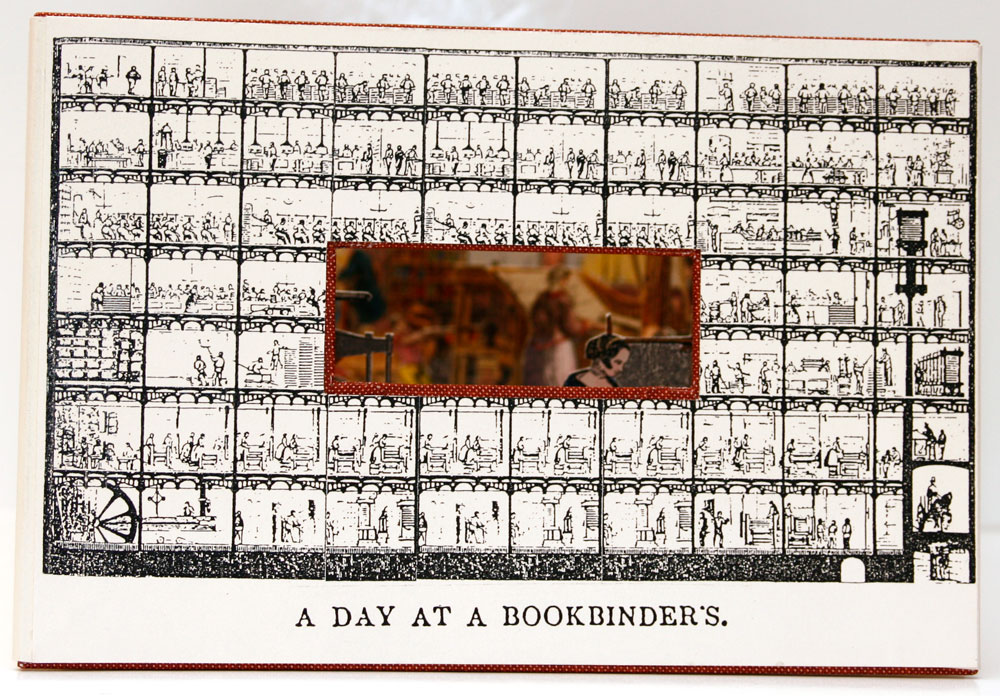
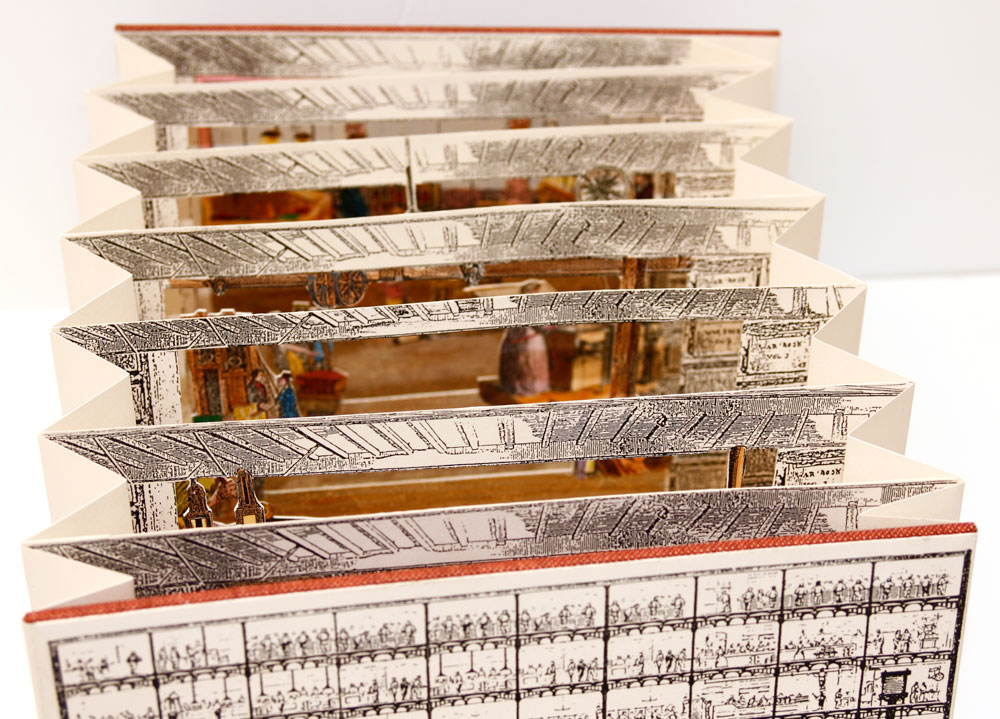
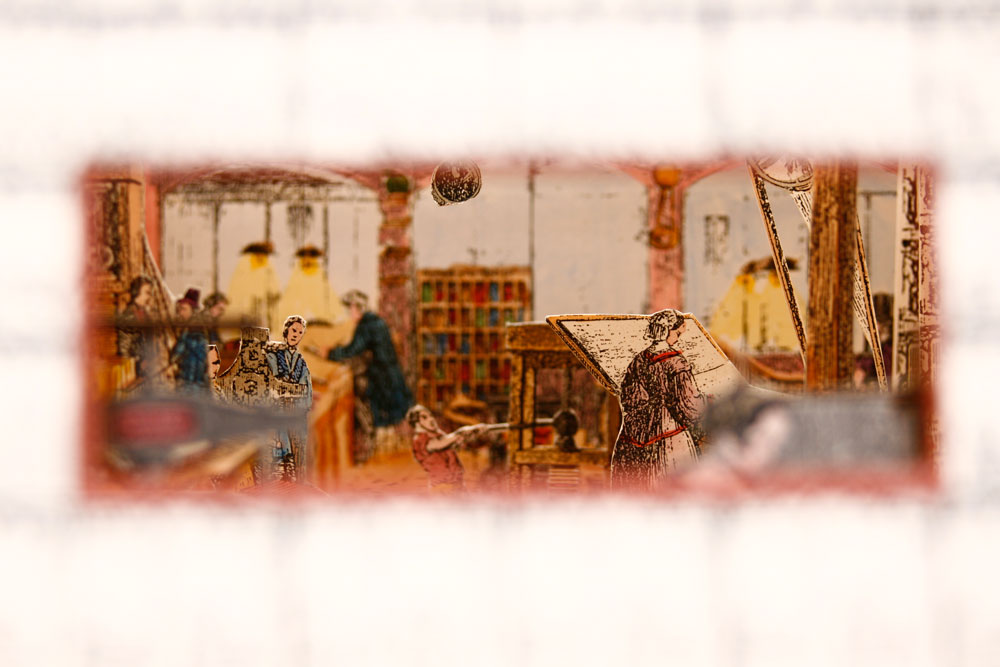
Box for A Day at a Bookbinder’sLast year my friend Cathy gave me this lovely tunnel book by Dominic Riley. It has slits along the sides to let in more light. Click on the images below to see an even larger photo.


at_a_bookbinders_2_small.jpg


at_a_bookbinders_3_small.jpg


at_a_bookbinders_4_small.jpg

Antibooks and Antipoetry

Antibooks and Antipoetry:

http://www.blankproject.co.uk/artwork/antibookMy friend Sharon sent me a link to pictures of Francisca Prieto’s The Antibook, described as a “non-conventional book of Nicanor Parra’s ‘AntiPoems’. It is a visual expression of his ‘Anti’ idea–opposing conventions. The essence of the book was analysed and its components abstracted in order to re-define the conventional form of a typical book.”

This kept me busy for an hour, looking up “antipoetry” (defined by Wikipedia “as an art movement that attempts to break away from the normal conventions of poetry… and sought to reject the belief that verse holds any mystical power. The poems have been described as prose-like, irreverent, and illuminating the problems of human existence.”)

The movement was founded by Chiliean poet Nicanor Parra. To get an idea of his poetry, here is one from his book Antipoems: How to Look Better & Feel Great

Stop Racking your brains

nobody reads poetry nowadays

it doesn’t matter if it’s good or bad.


See more poems and other writing here.

Wicked Witch in the Book

Wicked Witch in the Book:

Wicked witch in the bookCheck out these whimsical bookmarks I found recently on Etsy.

Shall We Dance? Making & Designing a Flipbook.

Shall We Dance? Making & Designing a Flipbook.:


Cover for Shall We Dance?

Making a flipbook

In 2005 I started a new flipbook about a girl who is both a ballerina and a hip-hop dancer. My idea was that she would start off as a ballerina doing an adagio, and when she does a pirouette she turns into a hip-hop dancer who shows off her moves before turning back into a ballerina again. I drew rough pictures and made them into a movie but didn’t like the result. A flip book has to work both forward and backward, and I couldn’t make the story work in both directions. (My experience is that about 50% of the people who look at my flipbooks start from the back and the other half start from the front.)

A month or so ago I happened upon the folder with all the drawings, and I took another look at what I’d done. Since 2005, I’ve made an enormous number of the flipbooks I sell in my shop and I’ve honed the production down to an exact science. I realized just by looking at my sketches that if I applied all that experience to the story I’d started, I could make it work. Of course there are a lot of steps, at least for me, before I’m ready for producing the books. First I had to flesh out my story and draw more frames. These need to be scanned and cleaned up in Photoshop. I draw the pictures in black and white and color them after scanning, using Photoshop again. I get a more even color across the frames if I do the coloring digitally. The second picture above is an example of my first sketch and the final cleaned up and colored version. The hands and head were too big on most of my sketches.

I put all the frames in order in layers in Photoshop, all the same size, so I can turn layers off and on to see how things are lining up. I also print out the frames on one sheet of paper, like a condensed film strip, again so I can make sure everything is sized correctly, that the details in the illustrations show up, and the colors are okay. Here’s an example of that:

Mini film strip for my flipbook

A flipbook is sort of a movie, but depending on how fast the reader thumbs through the book, it can be slow or fast or smooth or jerky. But to get an idea of how the book would flip in an ideal world, I also make a movie using IMovie. Here’s the book playing forward:


Finally, I’m ready to assemble everything for printing and binding. For that I use InDesign. To make cutting the books easy, I put a grid on the page, then put the same frame in each slot on the page, then repeat for all the frames in the book. Now when I print the pages, the book is collated, and all I need to do is chop it, staple it, and glue on the binding strip at the top. There’s no chopping necessary after the binding, to even up the edges. The page below shows the grid — the blue lines are the cut lines after everything is printed. The paper is letter-size (8-1/2″x11″), grain long (the staple/binding goes on the long edge so the pages flip well). I use fairly heavy text-weight paper (32 lb) — cover stock is too thick to flip well, and thinner paper tends to stick together.


Cut lines


That’s about it. All my flipbooks are are available here. I have other posts on my blog about flipbooks here.

razorbladesalvations:by Adriana

razorbladesalvations:

by Adriana
:

razorbladesalvations:


by Adriana


Noun

Noun:

Book artist and printmaker Yuka Petz created this fun book of mix and match words. By flipping the each side of the book, you can create a new nouns with crazy new meanings. Yuka started with 27 real English words and their definitions but then divided into two parts. Each time one side of the book is flipped, the word and definition changes. There are so many variations and many of them seem like they might be real words. Some funny examples are: muffin + tyrant = muffrant: A quick bread made of batter unrestrained by law or constitution, or whisper + umbrella = whisbrella: A low sibilant utterance for sheltering one from rain and sun. Learn more about Yuka’s work from her site here.